

Our How to Survive in Project Zomboid guide isn’t just about staying alive—it’s about lasting long enough to matter. Because in this game, you will die. Eventually. But the question is, how far can you go before the inevitable? And how much can you carve out in a world that’s actively trying to erase you?
Project Zomboid, developed by The Indie Stone, is a top-down, isometric survival-horror RPG that simulates the zombie apocalypse with ruthless realism. No flashy hero arcs. No guaranteed safe zones. Just you, your bad decisions, and the slowly creeping rot of Kentucky’s infected streets.
Let’s break down how to not get eaten—at least for a while.

The First Day: Don’t Be a Hero
You wake up in a random house with almost nothing. Here’s your first mistake: rushing out the door thinking this is an action game. It’s not.
Your first priorities:
- Loot the house quietly. Look for a weapon (kitchen knife, frying pan), food, and a backpack. If you find a hammer and nails, you’re already ahead.
- Don’t break windows unless you have to. Use curtains. Stay low.
- Check for a map. It’s not always there, but when it is? Gold.
Avoid confrontation. Your starting skills are garbage. One bite, and your timeline’s already on a countdown.

Stealth Is Survival
Let me make this painfully clear: Noise kills. If you think you can take on three zombies at once with a baseball bat and a dream, you’re already dead.
Learn the basics:
- Crouch to move silently (hit “C”).
- Use line-of-sight. Zombies lose you if you break vision and stay hidden.
- Keep your encumbrance low. Overloaded = slow. Slow = dead.
Use doors wisely. Closing doors behind you buys time. Zombies don’t politely open them—they smash.
Advanced Tips:
- Sound baits. Toss an alarm clock or TV remote to redirect a crowd.
- Glass shards. Remove broken glass from windows before vaulting. Your feet will thank you.
- Decoys. Leave radios or TVs on in other houses to lure zombies away from your actual route.

Finding a Base
You’ll want to settle somewhere—but timing matters.
Early base rules:
- Away from urban centers. Riverside and West Point? Nightmare fuel on Day 1.
- Two-story house. You’ll want a rope ladder escape eventually.
- Nearby water source. Later on, the plumbing stops working.
Barricade early. Use sheets as curtains. Move furniture to block doors. It’s not glamorous, but it’s better than having your face eaten while sleeping.
Long-term Base Tips:
- Fence building. Wooden fences stop zombies until they don’t—upgrade as you can.
- Trap placements. Don’t place traps near your sleeping area. Rats, noise, and misfires happen.
- Escape routes. Always have at least two. One ground-level, one upstairs with a sheet rope.

Food, Water, and Power
In the first week:
- Loot perishables early. Fridges still work while power’s on.
- Cook when it’s safe. Rotten food becomes dangerous fast.
- Stockpile canned food. You’ll thank yourself later.
When the power and water eventually shut off (around Day 14–30), you’ll need a long-term plan:
- Rain barrels. Build them before plumbing goes.
- Farming. Get those cabbages growing.
- Fishing and trapping. More sustainable than looting forever.
Farming Tips:
- Start with cabbage. Fast growth and good nutrition.
- Don’t overwater. Plants can rot. Watch the soil moisture.
- Scarecrows work. Crows ruin crops over time.

Combat Isn’t Glory—It’s Risk Management
Fighting is loud, tiring, and dangerous. But when you have to fight, do it right:
- Aim for the head. Always. Even with blunt weapons.
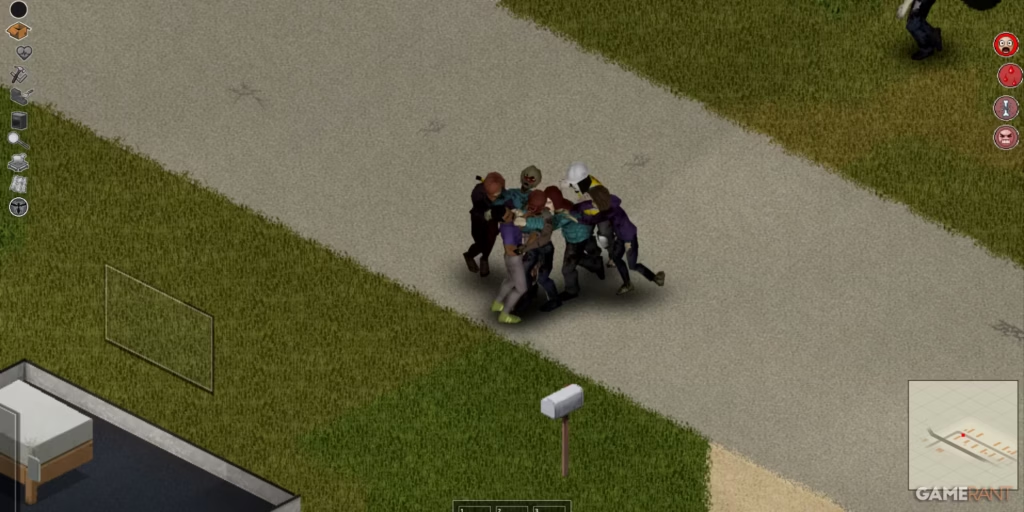
- One-on-one. If you’re surrounded, you did something wrong.
- Watch your stamina. If your character’s huffing and puffing? Stop.
- Use fences and windows tactically. Let zombies climb, then stomp them while they’re stuck.
Weapon Tiers:
- Tier 1: Rolling pin, kitchen knife, fork — only if desperate.
- Tier 2: Hammer, crowbar, baseball bat.
- Tier 3: Machete, axe, sledgehammer (if you’ve got the strength).

The Inventory Game: Weight Kills
Everything in Project Zomboid weighs something. And it adds up.
- Get a backpack ASAP. Hiking or duffel bags are top-tier.
- Only carry what you need. Tools are great, but you don’t need a sledgehammer on grocery runs.
- Stack smart. Fill containers. Balance load between primary and secondary carry.
Extra Storage Tips:
- Don’t hoard in your pack. Use crates, shelves, and ground tiles to offload.
- Sort by need. Food near the kitchen, tools in the garage, meds in a known drawer.
- Organize skill books. Label shelves or use memory cues. Efficient learning = faster growth.
Mental Health and Fatigue
Your character can’t just keep pushing. They’ll burn out.
- Sleep regularly. Exhaustion = slow swings and lower perception.
- Read skill books. It’s not just XP boost—it’s how you pass time.
- Stay fed and hydrated. Even mild hunger tanks your stamina.
Moodlets Matter:
- Bored? Read or watch TV.
- Panicked? Take beta blockers. Smoke if you’re a smoker.
- Unhappy? Eat a comfort food or find entertainment.
Long-Term Survival: Skills and Sustainability
Every skill matters, but early-game focus should be:
- Carpentry. For barricading, building rain barrels, and making safehouses.
- Cooking. Burnt food can kill. Good meals boost morale.
- Foraging. Once stores are picked clean, this keeps you going.
- Mechanics and Electronics. For fixing and hotwiring cars.
Bonus Tips:
- Tailoring: Repair clothes and boost protection.
- Trapping: Passive food generation in rural zones.
- Metalworking: Reinforce bases in mid to late-game.

Cars: A Blessing and a Curse
Cars change the game. But they’re noisy, require maintenance, and attract attention.
Tips:
- Hotwire with skills or a key. Breaking windows is last resort.
- Check the battery. No battery = dead weight.
- Don’t hoard cars. One good one is all you need.

Fuel Management:
- Siphon from other vehicles. Use gas cans, but be quick.
- Generators require fuel too. Always leave some behind at base.
- Find gas stations early. Use while they still have power.

NPCs and Multiplayer (When Enabled)
Multiplayer adds complexity. Other players can be allies—or threats. NPCs (coming soon to stable release) will shake things up even more.
Treat every person as a wildcard. Trust is earned. And betrayal can be devastating.
Co-op Survival:
- Designate roles. One cooks, one fights, one loots.
- Share base chores. It builds efficiency.
- Avoid PvP unless agreed. Trust builds longevity.

Emergency Scenarios and What to Do
- Horde spotted? Retreat. Don’t try to thin it solo.
- Injured? Clean wounds, bandage immediately, rest.
- On fire? Stop, drop, and roll. Literally.
- Caught out at night? Find a quiet house, close curtains, stay silent.
Panic moments define your story—but staying calm defines your legacy.

Final Thoughts: You Will Die, and That’s Okay
Project Zomboid isn’t about winning. There’s no endgame, no final boss, no helicopter out. It’s about the days you do survive, the places you call home for a while, and the stories you create along the way.
Sometimes you’ll die to a scratch that turns. Sometimes to a window you forgot to check. Or maybe you just stayed too long in a looted gas station. That’s the game.
Every death is a lesson. And every lesson gets you a little further next time.
Our Project Zomboid survival guide closes with this: you can’t beat death. But you can outlast it long enough to matter. And sometimes, that’s enough.


